The Dynamics of Delusion: Modeling Bidirectional False Belief Amplification in Human-Chatbot Dialogue
BibTeX Citation
@misc{mehta_dynamics_2026,
  title = {The Dynamics of Delusion: Modeling Bidirectional False Belief Amplification in Human-Chatbot Dialogue},
  author = {Mehta, Ashish and Moore, Jared and Anthis, Jacy Reese and Agnew, William and Lin, Eric and Yin, Peggy and Ong, Desmond C. and Haber, Nick and Dweck, Carol},
  year = {2026},
  url = {https://arxiv.org/abs/2604.25096},
  note = {Preprint},
}
Executive Summary
There is growing concern that AI chatbots might fuel delusional beliefs in users. Some have suggested that humans and chatbots may mutually reinforce false beliefs over time, but quantitative evidence has been limited.
Using chat logs from individuals who exhibited delusional thinking, we develop a latent state model that captures accumulating and decaying influences between humans and chatbots. In our dataset of 19 participants spanning more than 390,000 messages, we find that a bidirectional influence model substantially outperforms a unidirectional alternative where humans are the primary driver of delusion.
We find an asymmetry in temporal dynamics: humans exert strong but short-lived influence on chatbots, whereas chatbots exert longer-lasting influence on humans. Moreover, chatbots show strong, stable self-influence over their own future outputs, which tends to perpetuate delusions over long stretches of conversation.
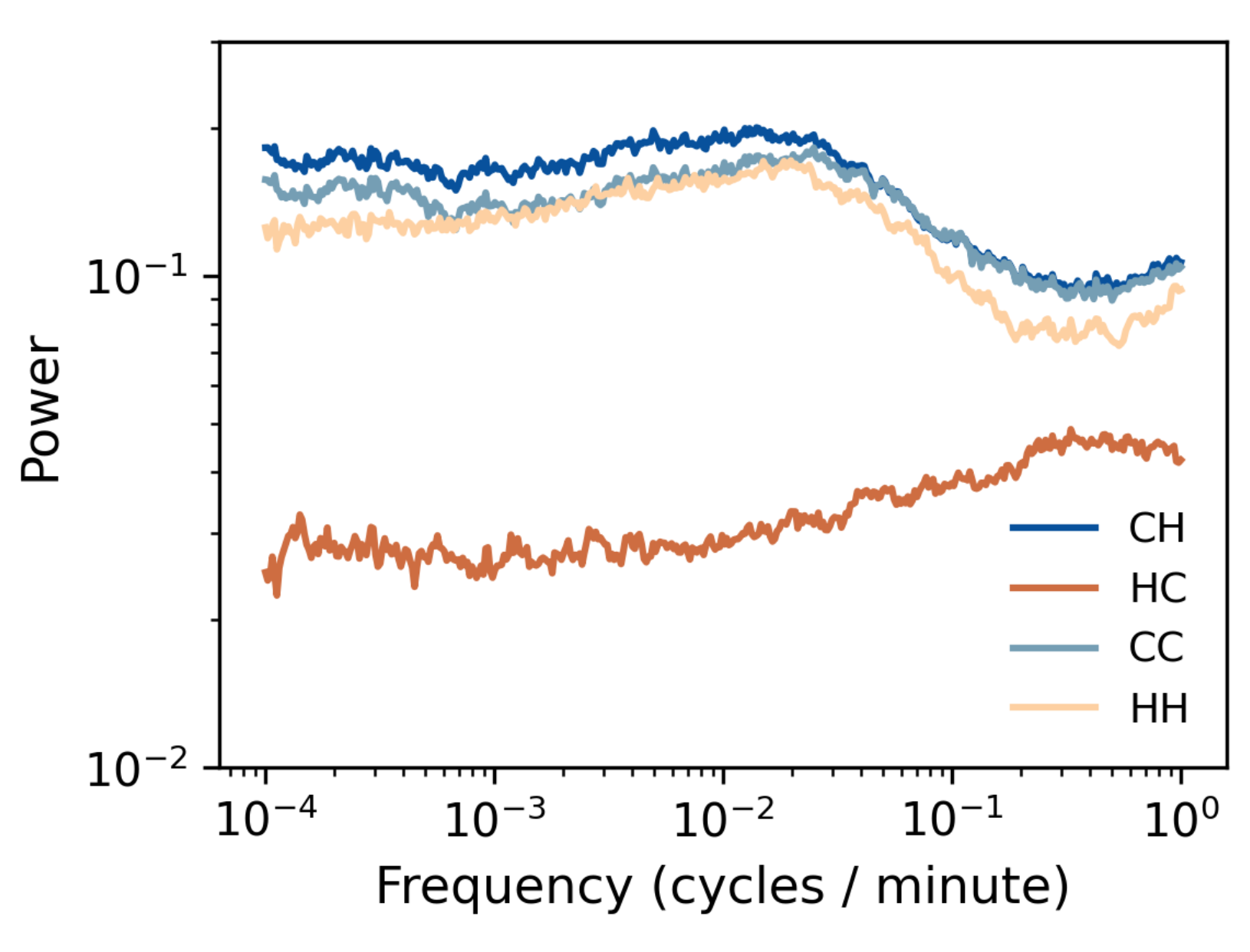
Together, these results provide quantitative evidence consistent with feedback loops of delusion in human-chatbot dialogue and help characterize distinct pathways with dissociable temporal dynamics, informing the development of safer AI systems.